The Reserve Fund Question Every East Boston Condo Buyer Should Ask Before They Waive Anything
August 20, 2026
August 20, 2026
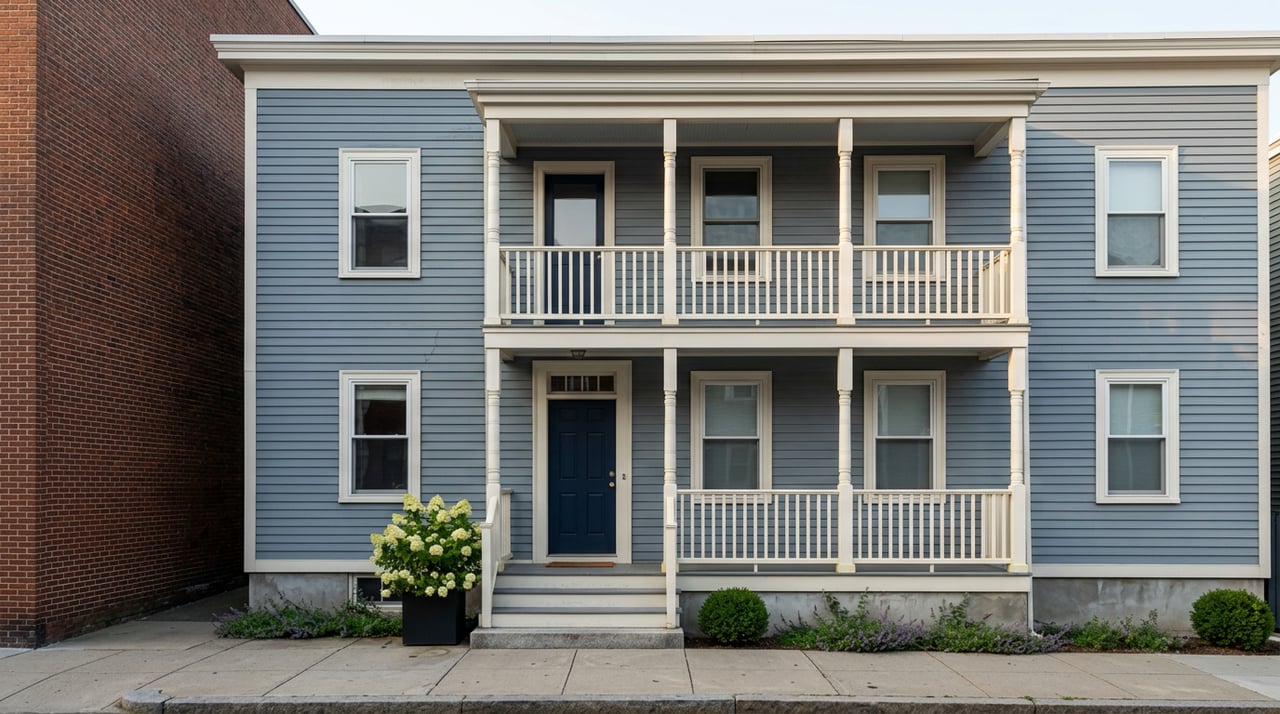
Two condos hit the market in East Boston last spring within a few weeks of each other. One sat inside a converted triple-decker on a quiet street in Jeffries Point, three units total, self-managed by the owners themselves. The other was a unit in one of the newer buildings clustered near Maverick Square, part of a larger association with a property manager on retainer. Same neighborhood, similar square footage, similar asking price. A buyer comparing them on price alone would have no way to know that one of those two associations was carrying real financial risk that the other had already priced in and planned for.
That gap does not show up on a listing sheet. It shows up eighteen months later, in a letter.
Every condo association in Massachusetts is required by law to keep a reserve fund. Chapter 183A of the Massachusetts General Laws states it plainly: all condominiums must maintain an adequate replacement reserve fund, collected as part of common expenses and kept in an account separate from day to day operating money. That sounds like protection. In practice, the word doing all the work in that sentence is "adequate," and the statute never defines it. No dollar figure. No percentage of the budget. No requirement that a professional actually study the building and tell the trustees what adequate means for their specific roof, their specific boiler, their specific porch stairs.
The 10 percent of budget figure that gets repeated as a rule of thumb in condo circles is not Massachusetts law. It comes from Fannie Mae and Freddie Mac underwriting guidelines for the secondary mortgage market, which most lenders follow because they want to be able to sell the loan. That guideline can shape what a bank will finance, but it does not obligate a three-unit association in Jeffries Point to hire an engineer or fund a specific number. A building can be in full legal compliance with a reserve account that has almost nothing in it, because the law asks whether a fund exists, not whether anyone has calculated what it should hold.
East Boston's condo stock is really two different markets wearing the same zip code. Along Jeffries Point, Eagle Hill, and streets like Meridian, the classic housing type is the triple-decker built between the 1880s and the 1930s, later split into two or three condo units. Those associations are often self-managed, run by the owners themselves out of necessity because a three-unit trust rarely generates enough in fees to justify hiring a management company. Near Maverick Square and Orient Heights, newer construction has added a different kind of building entirely, with larger unit counts, professional management, and buildings like 2 Maverick Sq, 656 Saratoga, 250 Bremen, and 6-10 Sumner Pl that were designed and financed with condo underwriting standards already baked in from day one.
A professional reserve study in Massachusetts typically runs a few thousand dollars into the low five figures. Spread across a fifty-unit building, that cost barely registers in the monthly fee. Spread across three owners, it is a real line item, which is exactly why small triple-decker trusts are the ones least likely to ever commission one. The building most likely to need an outside opinion about its aging systems is also the building least likely to be able to afford asking for it.
This is the part a buyer comparing two listings on price alone will miss entirely. The law treats a three-unit trust and a fifty-unit association identically. The economics of complying with that law do not.
The clearest cautionary example in Boston is not a triple-decker. It is Harbor Towers, the waterfront condominium where trustees voted to spend $75.6 million replacing aging HVAC systems, and unit owners were hit with individual assessments ranging from $70,000 to $400,000 each. Some owners had to sell to cover the bill. The building had reserves. They simply were not sized for the moment the mechanical systems that had been running since the tower went up finally reached the end of their working life at the same time.
Attorney Rich Rosa, cofounder of Buyers Brokers Only LLC, put the buyer's job plainly in an April 2026 Boston.com report on rising condo fees: buyers and their agents have to ask whether any special assessments are coming, what the age of the building and its systems actually is, and what the budget shows, because buyers should know exactly what they're buying and what to expect. Eric Churchill of Schernecker Property Services, who has reviewed hundreds of associations, told the same reporter that in his experience not one was properly funded to maintain its infrastructure over the long term, and most were dramatically underfunded, because boards keep monthly fees low to avoid pushback until the bills catch up all at once.
No triple-decker in East Boston is going to generate a $75 million assessment. But scale that same mechanism down to a three-unit building with a forty-year-old roof and original porch framing, and a $24,000 repair becomes an $8,000 bill per owner, arriving with the same lack of warning and the same underlying cause: a fund that existed on paper but was never sized against what the building would actually need.
| Small triple-decker trust | Larger newer association | |
|---|---|---|
| Typical size | 3 to 6 units | 20+ units |
| Management | Often self-managed by owner-trustees | Professional management company |
| Reserve study likelihood | Rare, cost is a bigger share of a small budget | More common, standard in larger Greater Boston buildings |
| Aging systems to watch | Roof, porches, original boiler, knob-and-tube remnants | Elevators, HVAC, parking structure, building envelope |
| Where the surprise usually hides | One deferred repair lands on very few owners at once | Multiple systems age out in the same window |
Price and location tell you about the unit. The condo documents tell you about what you are inheriting along with it. Before you write an offer on any East Boston condo, especially one in an older conversion, ask your agent to pull four specific things.
None of this should scare a buyer out of East Boston's older housing stock, which is a large part of what makes the neighborhood affordable relative to the rest of the harbor. It should change what you ask for before you decide how much contingency room to give up in a competitive offer.
Does Massachusetts require condo associations to get a professional reserve study? No. Chapter 183A requires an adequate reserve fund but does not mandate a study to define what adequate means for a specific building.
Is there a legal minimum amount a reserve fund has to hold? No state minimum exists. The 10 percent of budget benchmark buyers hear about comes from Fannie Mae and Freddie Mac lending guidelines, not from Massachusetts law.
What if the seller can't produce financial records or meeting minutes? Ask why. Massachusetts law entitles owners and prospective buyers to request association records, and a pattern of missing documentation is a signal worth factoring into your offer, not a formality to skip past.
Are newer East Boston buildings automatically safer than older triple-decker conversions? Safer from a documentation standpoint in many cases, since larger associations are more likely to already have professional management and a reserve study. Newer does not mean risk-free. It means a different set of aging systems to ask about, usually further out on the timeline.
Buying into East Boston's older housing stock can be one of the better values left near the harbor, and it can also come with real financial exposure that a listing price will never disclose on its own. If you are weighing a triple-decker conversion against a newer building and want someone to actually read the condo package before you write an offer, Lynn D'Avolio has spent years walking North Shore and East Boston buyers through exactly this kind of due diligence. Let's Connect before you waive anything you shouldn't.



Whether you’re buying your first home, selling a trust property, or navigating a probate sale, my goal is always the same: to provide honest guidance, strong advocacy, and a smooth experience from beginning to end. Real estate is about people, not just properties. I would be honored to help you take your next step.